Watch Reviews
Teddy Baldassarre: The Most Compelling Moonphase Watches
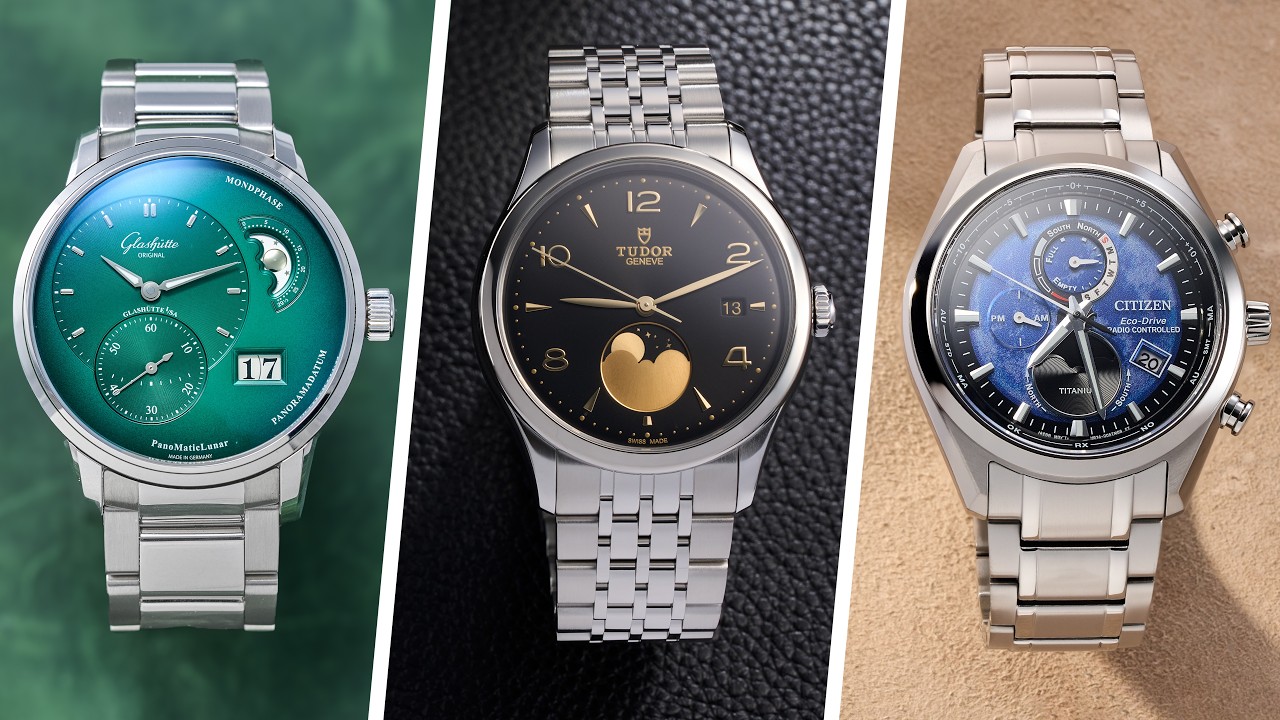
Teddy Baldassarre frames the moonphase debate around three clear priorities: accuracy, legibility and how the complication is integrated into the dial. His roundup forces a simple buyer question: do you want astronomical fidelity or visual presence?
By HorologyTalk Editorial · · 3 min read
Originally reported by Teddy Baldassarre. This article is a curated summary of their original coverage.
Three criteria decide whether a moonphase works on the wrist
In a recent video, Teddy Baldassarre distills what makes a moonphase compelling: the movement’s accuracy, how clearly the moon reads at a glance, and whether the display feels like an awkward add-on or an integral design element. As Teddy Baldassarre first reported, those three axes separate thoughtful implementations from mere decoration.
Movement matters — but not in the way you expect
Accuracy is the talking point among collectors: perpetual-calendar-level moonphases can stay true for years, while simple gear-train discs drift faster. Teddy emphasizes that most buyers won’t need a decades-precise moonphase; they care that the mechanism is reliable and serviceable. That pushes attention toward the construction of the caliber and how the moon module is integrated, not just headline accuracy numbers.
Design decisions that change the watch
Legibility and visual weight determine whether a moonphase feels purposeful. Large apertures, contrasting lunar graphics, or recessed subdials make the complication readable at a glance. Conversely, a tiny moon tucked into a cluttered calendar ruins both purpose and proportion. Teddy highlights choices on dial layout and finishing that either harmonize the moonphase with the rest of the watch or set it apart awkwardly.
Case, material and context
Where the moonphase sits — dress watch, sports-luxury or a hybrid — alters expectations. A thin dress case calls for a restrained, elegantly rendered moon. A more robust sport model can carry bolder lunar art or color contrasts. Teddy points out that materials and finishing—how the moon disc is printed or finished, the dial texture, and case finish—change perceived value as much as the technical spec of the module.
Buying angle: decide which axis matters more to you before you look at brands. If you prize astronomical accuracy, probe the caliber and serviceability. If you prize presence on the wrist, judge aperture size, contrast and dial balance. Teddy’s roundup gives buyers a practical checklist rather than a single recommendation — which leaves one useful question: are you buying a moonphase to track the sky or to complete the watch’s design?
Originally reported by Teddy Baldassarre. This article is a curated summary of their original coverage.
Tags: Moonphase, Complication, Mechanical movement, Dial design