Industry News
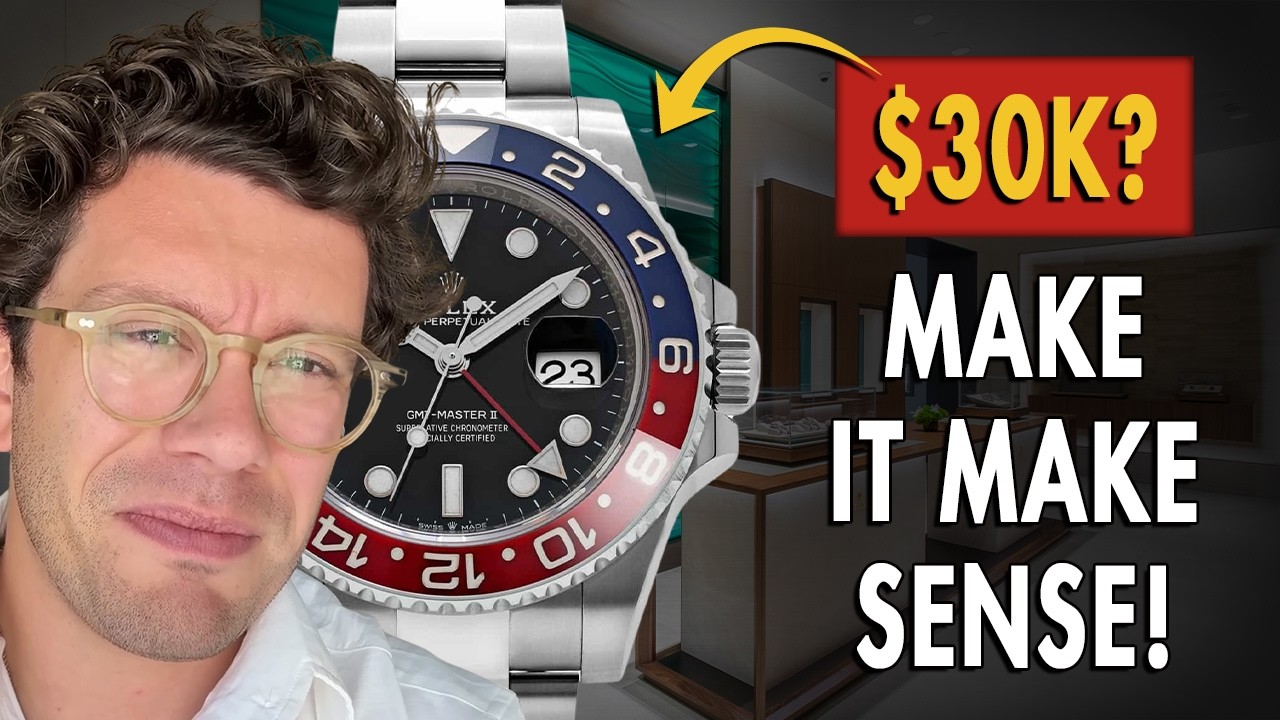
The $30,000 Rolex 'Pepsi' Bubble: Why the Discontinued Claim Is a Red Flag
Listings asking north of $30,000 claim the Rolex GMT‑Master II 'Pepsi' is "discontinued". That claim is often used to inflate prices — always verify paperwork and movement details before buying.
By HorologyTalk Editorial · · 3 min read
Originally reported by Theo and Harris. This article is a curated summary of their original coverage.
When a Classic Becomes Clickbait
Listings asking north of $30,000 claim the Rolex GMT‑Master II with the red‑and‑blue bezel — the "Pepsi" — is "discontinued." The modern steel reference 126710BLRO pairs a 40mm Oystersteel case and Jubilee bracelet with a red‑and‑blue Cerachrom bezel and is powered by Rolex’s Calibre 3285: about 70 hours of power reserve, Chronergy escapement, Parachrom hairspring and 100 metres water resistance. Those specs make it a capable daily watch, but they don't justify unquestioning acceptance of extreme secondary‑market prices.
How the 'Discontinued' Narrative Fuels Price Hikes
In recent months sellers have used vague claims of discontinuation to create urgency and FOMO. Rolex updates collections from time to time, but unsupported statements that a model is "no longer produced" become a pretext to demand five‑figure premiums. When provenance is thin, the claim is rumor dressed as fact.
Common Warning Signs of an Overpriced or Risky Sale
- Ambiguous provenance — missing original warranty card, blank or mismatched serial numbers, or altered paperwork.
- Aftermarket parts sold as "original" — bezels, dials or bracelets swapped to mimic rarer variations.
- Heavy polishing or refinishing that erases factory lines and misrepresents condition.
- Claims of immediate scarcity used to rush buyers into impulse purchases.
- Asking prices far above established grey‑market ranges with no clear explanation (service history, recent warranty, or retail provenance).
What to Check — Beyond the Pretty Bezel
Technical verification beats marketing. The Calibre 3285 is notable for its energy‑efficient Chronergy escapement and a Parachrom hairspring resistant to magnetic fields and shocks; it runs on about a 70‑hour reserve and sits inside Rolex’s 40mm Oyster case rated to 100 metres. Ask for the original warranty card (date, AD stamp), service invoices, and clear serial‑number photos — or an in‑person check. A reputable seller should welcome an independent inspection by a watchmaker familiar with Rolex movements; an internal check will expose aftermarket parts or swapped components.
Market Context and Practical Advice
Demand for many Rolex steel sports models still outstrips supply, and that imbalance has created a profitable grey market. Authorized dealers use allocation and waiting lists; other buyers pay premiums on secondary channels. If price matters, consider earlier GMT‑Master references, the white‑gold 126719BLRO (a very different price proposition), or dual‑time models from related brands. For high‑value purchases insist on full documentation, use escrow, and buy from sellers with verifiable track records.
Quick takeaway: the red‑and‑blue look will always be desirable, but the word "discontinued" is being weaponised. Verify the facts, validate the paperwork, and don’t let hype erode basic due diligence.
Patience and paperwork will usually beat panic. If you want the Pepsi look without the runaway premium, target well‑documented examples or alternatives with similar pedigree; if you prefer to pay a premium, demand verifiable provenance and an independent inspection before handing over the cash.
Originally reported by Theo and Harris. This article is a curated summary of their original coverage.
Tags: Rolex, GMT, Automatic, Market