Industry News
Why the Rolex 'Pepsi' Still Rules the GMT Market — A Fresh Price and Availability Brief
The steel Rolex GMT‑Master II 'Pepsi' runs on the Calibre 3285 with a 70-hour power reserve and still commands a secondary-market premium. Scarce allocation, bracelet choice and provenance now drive sharp price divergence.
By HorologyTalk Editorial · · 3 min read
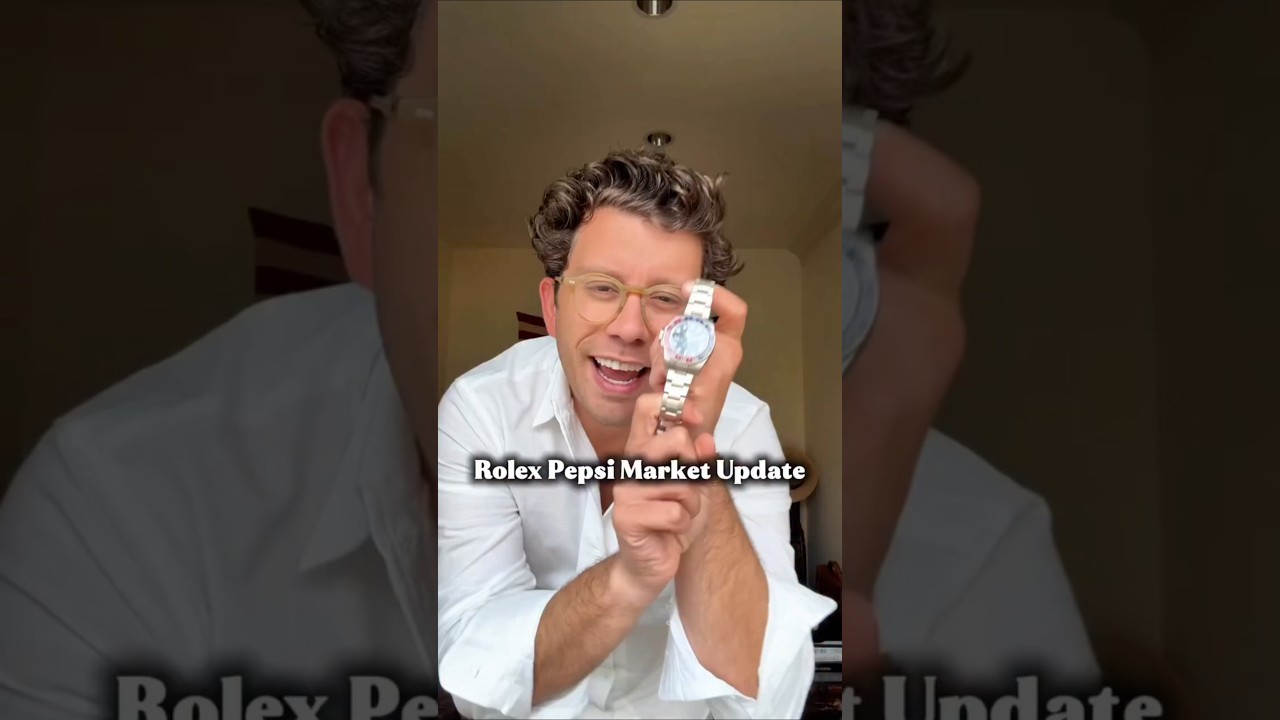
Originally reported by Theo and Harris. This article is a curated summary of their original coverage.
Enduring desirability: the Pepsi as market thermometer
The GMT‑Master II in red-and-blue Cerachrom — the 'Pepsi' — combines a 40mm case, 70‑hour Calibre 3285 and 100‑metre water resistance. That concrete specification sits behind a larger market reality: Rolex’s measured distribution, historic appeal and instantly recognisable design keep the steel Pepsi near the centre of collector and dealer attention.
What’s under the hood — and which references matter
The modern steel Pepsi runs on Rolex’s in‑house Calibre 3285, which brought a 70‑hour power reserve, the Chronergy escapement and a Parachrom hairspring to the line. The bi‑colour bezel is Cerachrom ceramic and the case holds to Rolex’s classic 40mm footprint — a formula built for daily wear and travel functionality.
Collectors watch specific variants closely: the steel GMT‑Master II in Oystersteel on a Jubilee bracelet, the steel examples on an Oyster bracelet, and the white‑gold Pepsi, which sits in a separate price tier. Condition, serial range and whether a watch comes as a full set with an AD warranty card and box remain decisive value factors.
Market drivers and allocation realities
"Allocation for the Pepsi remains intentionally restrained — that scarcity fuels both collector interest and speculative appetite,"
insiders say. Primary allocations are selective, and authorised dealers juggle long‑standing client promises with new enquiries. That creates an uneven flow to the secondary market where premiums aren’t uniform — they shift by provenance, bracelet, production year and completeness.
What will move the market next: any change in Rolex’s distribution, broad economic shifts that affect discretionary spend, and the balance between buyers who wear and those who trade quickly. Buyers should prioritise provenance and patience. Sellers get best value when a specific variant — Jubilee versus Oyster, steel versus white gold — hits a demand peak.
Bottom line
The red‑and‑blue GMT‑Master II is more than colour and legend; it’s the product of tight brand control and enduring demand. Expect short‑term price swings, but the model’s profile as a blue‑chip sports watch in Rolex’s catalogue looks likely to hold. If you’re buying: focus on full sets and the bracelet type you intend to wear. If you’re watching the market: track distribution shifts and variant‑specific demand for the clearest entry points.
Originally reported by Theo and Harris. This article is a curated summary of their original coverage.
Tags: Rolex, GMT-Master II, Calibre 3285, Collecting